WHY MAKE IT
A little comfort, a lot of flavor.
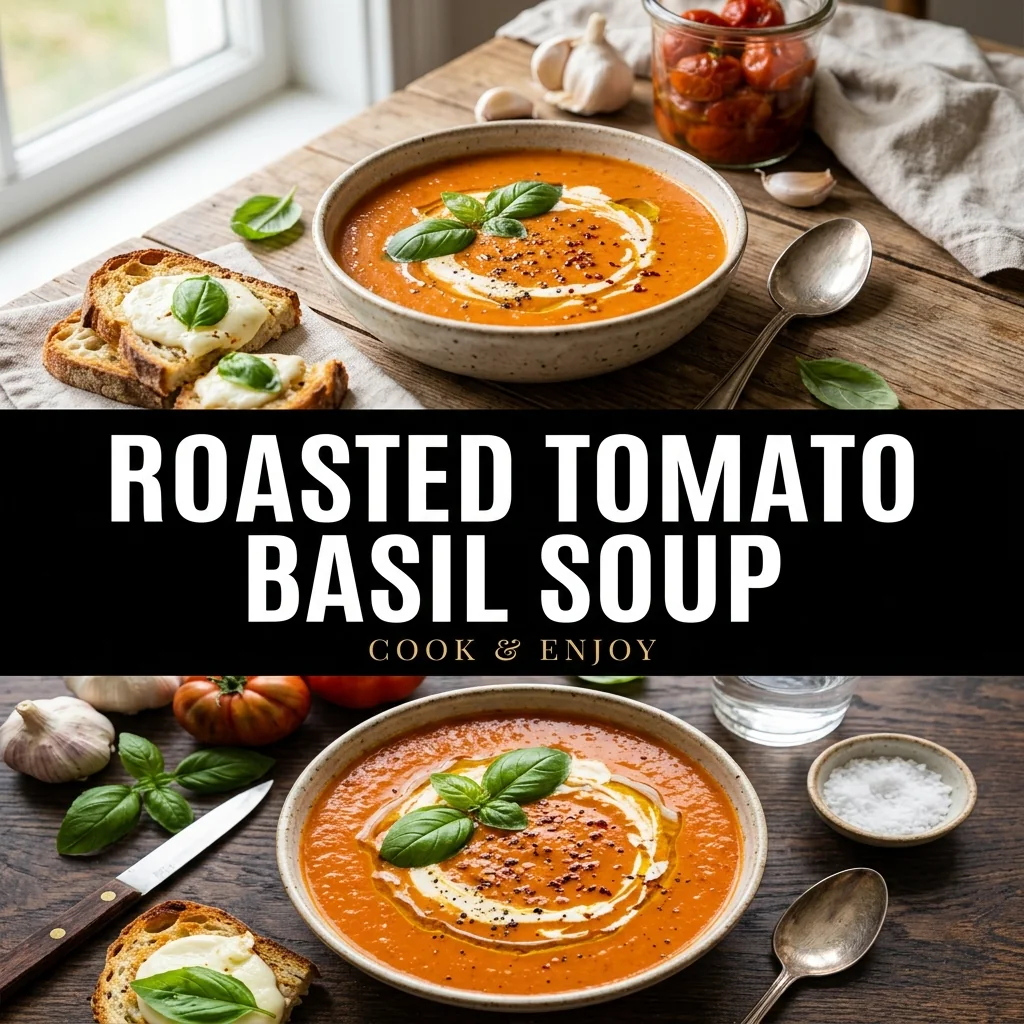
Roasted Tomato Basil Soup takes humble market produce and transforms it into an elegant, comforting staple. High-heat roasting alters raw tomatoes fundamentally, breaking down harsh acidity while concentrating natural sugars into rich, caramelized depths. Pairing dense Roma tomatoes with juicy cherry tomatoes provides a balance of pulp body and sweet juices, while roasting the garlic cloves whole mellows their sharp bite into buttery sweetness. A background note of balsamic vinegar accents the roasted sugars, and torn fresh basil stirred in at the very end guarantees bright, aromatic lift. Finished with just enough cream to round the edges without masking the fruit, this soup makes a satisfying centerpiece alongside crusty bread on cool evenings.
Tomato Selection and Roasting Physics
Roma tomatoes offer dense, meaty walls with minimal seed jelly, creating thick body without requiring flour or potato starches. Cherry tomatoes provide high concentrations of natural fructose that caramelize quickly under dry heat. Roasting at 400°F drives off excess water through evaporation, preventing a thin, watery potage. Charring the skins lightly introduces faint smoky notes that mimic hours of long stovetop reduction in a fraction of the time. Keep vegetables in a single uncrowded layer on a wide rimmed sheet to ensure true roasting rather than wet steaming.
Blending Technique and Texture
Achieving a restaurant-quality velvety consistency depends on thorough emulsification of the roasted skins and soft garlic cloves. An immersion blender offers safety and convenience directly in the Dutch oven, though a high-powered jar blender produces a silkier texture. When using a stand blender, work in small batches, remove the center lid plug, and drape a folded kitchen towel over the opening to allow steam to escape safely without splattering. Pureeing the fresh basil during the final blending phase preserves its delicate essential oils and vibrant green color.
Balancing Acidity and Dairy
Tomato acidity fluctuates widely depending on harvest season and soil composition. The addition of balsamic vinegar provides complex malic sweetness rather than sharp tang, tempering natural tartness without resorting to white sugar. Heavy cream softens remaining astringent edges and coats the palate, rounding the overall mouthfeel. If choosing a dairy-free approach, unflavored full-fat coconut milk or soaked raw cashews blended directly into the hot broth provide similar lipid body without curdling under the natural acid present in the roasted tomato base.
Before you start
For the richest natural sweetness, select deep red, fully ripe plum tomatoes. If roasting out of season when field tomatoes lack depth, adding cherry tomatoes compensates with concentrated natural sugars. Never skip venting a countertop blender: filling the jar more than halfway or sealing the center cap tightly traps expanding hot air, which can forcefully dislodge the blender lid and spray scalding liquid across the counter.
THE RECIPE
Roasted Tomato Basil Soup
6 servings · 20 minutes preparation · 55 minutes cooking · 10 minutes cooling, chilling or resting
Ingredients
Step-by-step instructions
- Preheat your oven to 400°F (204°C). Arrange halved Roma tomatoes, cherry tomatoes, onion wedges, and whole garlic cloves across a large, rimmed 18-by-13-inch baking sheet in a single layer, ensuring the cut sides of the plum tomatoes face upward to roast properly without stewing.
- Drizzle the vegetables with 2 tablespoons of extra-virgin olive oil and season evenly with 3/4 teaspoon of kosher salt and 1/2 teaspoon of black pepper. Toss gently by hand right on the pan until every piece shows a light, glossy sheen, then reposition evenly.
- Roast on the middle oven rack for 40 to 45 minutes until the tomato skins blister with charred edges and the onions turn soft and translucent. Remove the pan from the oven and allow everything to sit undisturbed for 10 minutes so residual pan steam settles.
- Warm the remaining 1 tablespoon of olive oil in a heavy 5-quart Dutch oven over medium heat. Transfer all the roasted vegetables, along with any concentrated pan juices scraped up with a spatula, into the pot, stirring in the dried oregano for 1 minute until fragrant.
- Pour in the low-sodium vegetable broth, stirring thoroughly to lift any caramelized fond stuck to the bottom of the Dutch oven. Bring the liquid to a lively simmer over medium-high heat, then lower the flame to medium-low and cook uncovered for 10 minutes to marry flavors.
- Stir the fresh basil leaves into the hot soup until wilted. Carefully blend the mixture using an immersion blender directly in the pot until completely smooth, or process in three separate batches in a countertop blender with the lid vented, working slowly to prevent steam buildup.
- Return the pureed soup to low heat. Stir in the heavy cream and aged balsamic vinegar, then taste and stir in the remaining 1/4 teaspoon kosher salt if desired, warming gently for 2 minutes before ladling into warmed shallow soup bowls.
Kitchen notes
For the richest natural sweetness, select deep red, fully ripe plum tomatoes. If roasting out of season when field tomatoes lack depth, adding cherry tomatoes compensates with concentrated natural sugars. Never skip venting a countertop blender: filling the jar more than halfway or sealing the center cap tightly traps expanding hot air, which can forcefully dislodge the blender lid and spray scalding liquid across the counter.
Storage & make-ahead
Cool the soup completely and divide into airtight glass containers within 2 hours of cooking. Store in the refrigerator for up to 4 days. For extended storage, freeze without the heavy cream for up to 3 months, thawing overnight in the refrigerator before use. Reheat gently in a saucepan over medium heat until steaming and reaching a safe internal temperature of 165°F (74°C).
An original recipe guide inspired by themes in our Pinterest research. Recipe has not been independently kitchen-tested. AI-generated image is illustrative; your finished dish may look different.
Frequently asked questions
Can I use canned whole tomatoes instead of fresh?
Yes. Drain two 28-ounce cans of whole peeled plum tomatoes thoroughly, toss them with the onions, garlic, and oil, then roast on the rimmed baking sheet for 30 minutes at 400°F (204°C) until lightly caramelized along the edges before continuing with the recipe.
Why did my soup taste too acidic?
Tomato acidity varies. Stir in a small pinch of sugar, taste, and repeat if needed. The cream also softens the sharpness. Additional vinegar makes the soup more acidic, so add it gradually to taste.
Do I need to peel the roasted tomatoes?
Peeling is unnecessary if you use a high-powered blender, as the charred skins pulverize completely and contribute pleasant roasted depth. If using a standard immersion stick blender, pass the pureed soup through a medium-mesh sieve for a silky, refined finish.