WHY MAKE IT
A little comfort, a lot of flavor.
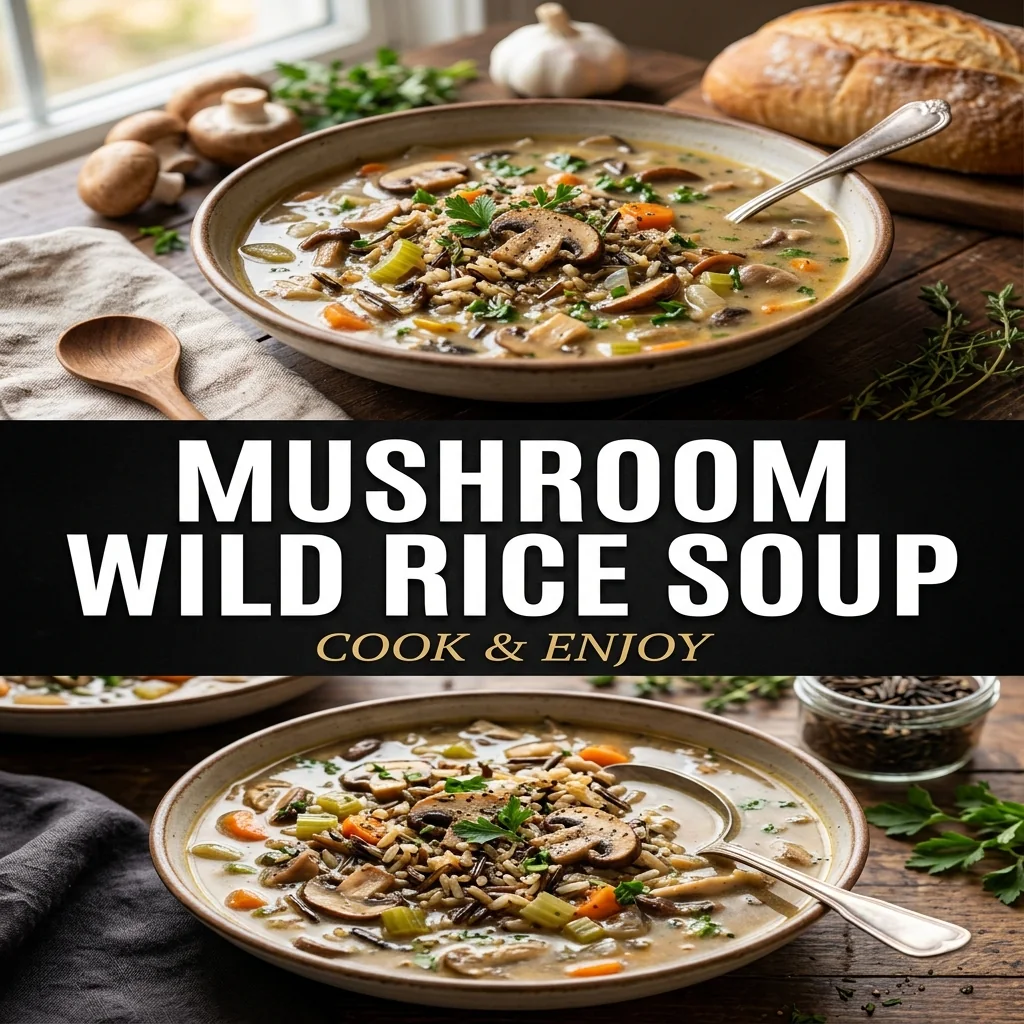
Mushroom wild rice soup is a celebrated staple of Upper Midwest regional cuisine, renowned for its comforting harmony of earthy mushrooms and nutty native grass grains. True wild rice is not actually rice, but the seed of an aquatic marsh grass, offering a distinctive chewy bite and roasted hazelnut aroma that holds up remarkably well in hot soups without turning soft. Pairing this textural grain with browned cremini and shiitake mushrooms establishes an intensely savory foundation that rivals any meat-based stock. A gentle blonde roux and a finishing touch of heavy cream lend a luxurious velvet texture that warms the palate without feeling overly heavy. It is an enduring autumn and winter favorite.
Mastering the Wild Rice
Wild rice requires substantially more simmering time than white rice varieties due to its tough fibrous bran jacket. Simmering the grains separately allows you to monitor their doneness precisely. Look for the classic butterfly cue: when the dark outer hull splits open down the center to reveal a tender, pale interior, the grain is cooked. Draining any leftover cooking water prevents dark anthocyanin pigments from turning the creamy soup broth an unappetizing purple-gray shade, preserving the appealing golden-cream appearance of the final presentation.
Browning the Mushroom Medley
A combination of cremini and shiitake mushrooms provides both accessibility and complex woodland flavor. Cremini mushrooms offer dense moisture and robust earthiness, while shiitakes supply a concentrated blast of natural glutamates. The critical culinary technique here is allowing the mushrooms to brown dryly in fat before adding aromatic vegetables. When mushrooms release their water into a crowded pan, they steam rather than sear. Giving them space and steady heat produces golden-brown edges that intensify the foundational broth.
Achieving Velvety Creaminess
The soup's body is created through a measured roux: all-purpose flour cooked directly into melted butter and aromatic mirepoix. Whisking the vegetable broth into this mixture in steady increments prevents clump formation and ensures smooth thickening as the starch granules hydrate. Heavy cream added at the very end enriches the broth without masking the herbal notes of thyme. Keep the heat on low once dairy enters the pot to prevent the emulsion from breaking or scorching against the bottom.
Before you start
Cooking the wild rice separately in plain water ensures your finished soup stays clear and light rather than turning murky or gray from wild rice pigment. For superior mushroom flavor, resist the urge to stir the mushrooms immediately after adding them to the hot butter and oil. Letting them make firm contact with the hot metal encourages intense Maillard browning, which imparts deeply savory umami notes throughout the vegetable broth.
THE RECIPE
Mushroom Wild Rice Soup
6 servings · 20 minutes preparation · 60 minutes cooking · 5 minutes cooling, chilling or resting
Ingredients
Step-by-step instructions
- Place rinsed wild rice and 2 cups of water into a small saucepan. Bring to a boil over medium-high heat, then reduce heat to low, cover tightly, and simmer for 40 to 45 minutes until grains are tender and slightly burst. Drain any excess unabsorbed liquid and set rice aside.
- While rice simmers, heat 1 tablespoon butter and 1 tablespoon olive oil in a 6-quart heavy pot over medium-high heat. Add sliced cremini and shiitake mushrooms. Cook undisturbed for 4 minutes to allow browning, then stir and cook 4 more minutes until moisture evaporates and mushrooms are deeply caramelized. Transfer to a bowl.
- Reduce heat to medium and melt remaining 2 tablespoons butter in the same pot. Add diced onion, carrots, and celery. Cook for 6 to 8 minutes, stirring frequently, until vegetables soften and onion turns translucent.
- Add minced garlic, minced thyme, kosher salt, and black pepper to the vegetables. Cook for 1 minute until fragrant. Sprinkle all-purpose flour over the vegetables, stirring constantly for 2 minutes to cook out raw flour flavor while forming a pale paste.
- Gradually pour in low-sodium vegetable broth in three separate additions, whisking vigorously after each pour to incorporate the flour without forming lumps. Bring the liquid to a simmer over medium heat, stirring regularly as the broth thickens slightly.
- Stir the cooked wild rice and caramelized mushrooms into the simmering broth. Reduce heat to medium-low and simmer uncovered for 10 minutes to allow the flavors to meld and the soup to achieve a light, cohesive body.
- Pour in the heavy cream and chopped flat-leaf parsley. Stir gently and heat over low for 2 to 3 minutes until warmed through, avoiding a rapid boil. Remove from heat, let stand for 5 minutes, and ladle into warm soup bowls.
Kitchen notes
Cooking the wild rice separately in plain water ensures your finished soup stays clear and light rather than turning murky or gray from wild rice pigment. For superior mushroom flavor, resist the urge to stir the mushrooms immediately after adding them to the hot butter and oil. Letting them make firm contact with the hot metal encourages intense Maillard browning, which imparts deeply savory umami notes throughout the vegetable broth.
Storage & make-ahead
Allow leftover soup to cool slightly and refrigerate in airtight containers within 2 hours. Store in the refrigerator for up to 3 to 4 days. Because heavy cream can separate if boiled violently during reheating, warm gently on the stove over low heat, stirring frequently, until an internal temperature of 165°F (74°C) is reached. Freezing is not recommended due to cream separation.
An original recipe guide inspired by themes in our Pinterest research. Recipe has not been independently kitchen-tested. AI-generated image is illustrative; your finished dish may look different.
Frequently asked questions
Can I cook the wild rice directly in the soup broth to save using another pan?
While possible, cooking wild rice directly in the broth requires an additional 2 to 3 cups of liquid and 45 minutes of cooking. Furthermore, the grain releases dark pigments that will turn your creamy broth a murky, dark purple-gray hue.
Can I substitute a non-dairy alternative for the heavy cream?
Yes. Plain, unsweetened cashew cream or full-fat coconut milk make effective dairy-free substitutes. Cashew cream provides the most neutral flavor profile, replicating the rich, velvety mouthfeel of heavy cream without introducing sweet or nutty coconut overtones.
Why did my soup become much thicker the next day?
Both wild rice and flour-thickened broths continue to absorb free liquid as they cool. When reheating leftovers, gently whisk in 1/4 to 1/2 cup of warm vegetable broth or water until the soup relaxes back to its original silky consistency.