WHY MAKE IT
A little comfort, a lot of flavor.
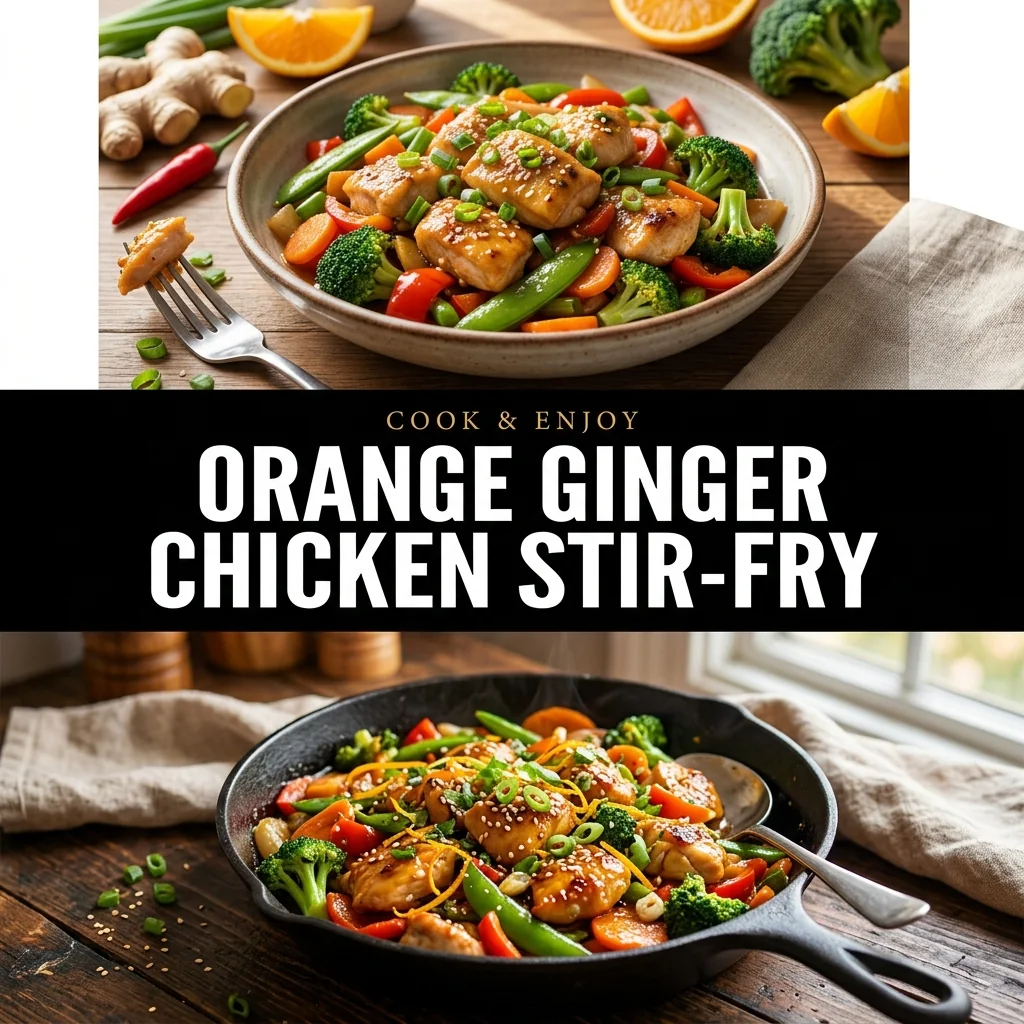
Stir-frying remains one of the fastest and most adaptable methods for preparing a wholesome poultry dinner, relying on intense heat and quick movement. This orange ginger chicken showcases a homemade citrus sauce crafted from fresh orange juice and zest rather than artificial flavorings or excessive refined sugars. Combining the natural sweetness of citrus with pungent freshly grated ginger root and savory soy sauce creates a balanced glaze that clings effortlessly to thinly sliced chicken breast and crisp-tender vegetables. By cooking the poultry and vegetables in distinct stages, each component develops optimal texture without turning watery or overcooked. In less than thirty minutes, this vibrant dish delivers a restaurant-style meal directly from your own stovetop.
The Velvet Technique for Tender Chicken
Thinly sliced chicken breast can dry out rapidly when exposed to high heat. Tossing the sliced meat in a mixture of soy sauce and cornstarch provides a gentle variation of traditional Chinese velveting. The cornstarch forms a delicate coating that seals moisture inside the lean meat fibers while cooking. As the chicken sears in the hot skillet, this light starched exterior browns attractively while remaining soft and succulent. It also aids sauce adherence later in the process, allowing the glossy citrus-ginger glaze to cling to every single piece of chicken.
Balancing Fresh Citrus and Aromatics
The success of this stir-fry hinges on using authentic fresh orange components. Bottled juice often lacks vibrancy and contains added sugars that alter the sauce balance. Zesting the orange before juicing captures essential citrus oils from the outer peel, infusing the sauce with deep aromatic punch. Combining this citrus base with grated ginger root cuts through the sweetness and provides mild, warming heat. Minced garlic lends savory foundation, while a touch of rice vinegar introduces bright acidity that complements the salty depth of low-sodium soy sauce.
Mastering Stir-Fry Temperature Control
Stir-frying relies on sequencing to preserve textural contrast across diverse ingredients. Cooking the chicken first allows the meat to develop color without boiling in moisture released from raw vegetables. Removing the meat prevents overcooking while the hardy vegetables sauté. Steaming the dense broccoli florets and carrots under a lid ensures they soften thoroughly without burning. Introducing minced garlic and ginger only at the end shields them from scorching. Once the sauce hits the hot metal, cornstarch activates instantly, transforming the thin liquid into a clinging glaze.
Before you start
Slice your chicken breast against the grain while it is slightly chilled to achieve uniform, tender strips that cook evenly in minutes. The brief cornstarch marinade locks in natural juices, creating a protective barrier against the high heat of the wok. Have all sauce ingredients measured and aromatics minced before heating the pan, as stir-frying moves rapidly and delays can cause garlic or ginger to burn.
THE RECIPE
Orange Ginger Chicken Stir-Fry
4 servings · 20 minutes preparation · 12 minutes cooking
Ingredients
Step-by-step instructions
- Place the sliced chicken breast strips into a medium bowl. Add 1 tablespoon of low-sodium soy sauce and 1 tablespoon of cornstarch, stirring until the chicken is evenly coated and no dry starch remains; set aside at room temperature while preparing the remaining ingredients.
- In a small bowl, whisk together the freshly squeezed orange juice, finely grated orange zest, 2 tablespoons of low-sodium soy sauce, honey, rice vinegar, and 1 teaspoon of cornstarch until smooth to create the stir-fry sauce.
- Heat 1.5 teaspoons of the cooking oil in a large 12-inch nonstick skillet or flat-bottomed carbon-steel wok over high heat until shimmering. Add the marinated chicken strips in a single layer and sear undisturbed for 2 minutes until lightly browned on the bottom.
- Stir-fry the chicken for an additional 2 to 3 minutes until mostly opaque and cooked through, ensuring internal pieces reach 165 degrees Fahrenheit (74 degrees Celsius). Transfer the cooked chicken to a clean plate.
- Add the remaining 1.5 teaspoons of cooking oil to the hot skillet. Add the broccoli florets, sliced red bell pepper, and carrot slices. Stir-fry briskly for 3 minutes until the vegetables brighten in color.
- Add 2 tablespoons of water to the skillet, cover immediately with a lid, and let the vegetables steam over medium-high heat for 90 seconds until the broccoli is crisp-tender. Remove the lid.
- Push the vegetables to the outer perimeter of the skillet. Add the minced garlic and grated ginger to the center and stir constantly for 30 seconds until intensely aromatic, taking care not to scorch the garlic.
- Return the cooked chicken and its accumulated juices to the pan. Whisk the orange sauce briefly, pour it into the center of the skillet, and toss everything together continuously for 1 to 2 minutes until the sauce bubbles, thickens, and glazes the chicken and vegetables.
- Remove the skillet from the heat, garnish with the thinly sliced green onions, and serve immediately over steamed rice or noodles.
Kitchen notes
Slice your chicken breast against the grain while it is slightly chilled to achieve uniform, tender strips that cook evenly in minutes. The brief cornstarch marinade locks in natural juices, creating a protective barrier against the high heat of the wok. Have all sauce ingredients measured and aromatics minced before heating the pan, as stir-frying moves rapidly and delays can cause garlic or ginger to burn.
Storage & make-ahead
Allow leftovers to cool slightly before transferring them into a sealed, airtight food container. Store in the refrigerator within 2 hours of cooking for up to 3 days. To reheat, warm in a lightly oiled nonstick skillet over medium heat for 3 to 5 minutes, stirring frequently, until the chicken registers an internal temperature of 165 degrees Fahrenheit (74 degrees Celsius). Reheating in a microwave in 1-minute bursts is also acceptable. Freezing is not advised as cooked broccoli becomes mushy.
An original recipe guide inspired by themes in our Pinterest research. Recipe has not been independently kitchen-tested. AI-generated image is illustrative; your finished dish may look different.
Frequently asked questions
Can I substitute chicken thighs for the chicken breasts?
Yes, boneless skinless chicken thighs can be used. Slice them into thin strips across the grain. They may take an additional 1 to 2 minutes to cook through completely to the required safe internal temperature of 165 degrees Fahrenheit (74 degrees Celsius).
What can I substitute if I do not have fresh ginger root?
While fresh ginger provides the best punch and aroma, you can substitute 1/2 teaspoon of ground ginger whisked directly into the liquid orange sauce mixture if fresh ginger root is unavailable.
How do I prevent the stir-fry sauce from turning clumpy?
Cornstarch settles quickly to the bottom of the measuring cup. Always whisk the sauce mixture thoroughly right before pouring it into the hot skillet, and stir the ingredients constantly as the liquid simmers and thickens.