WHY MAKE IT
A little comfort, a lot of flavor.
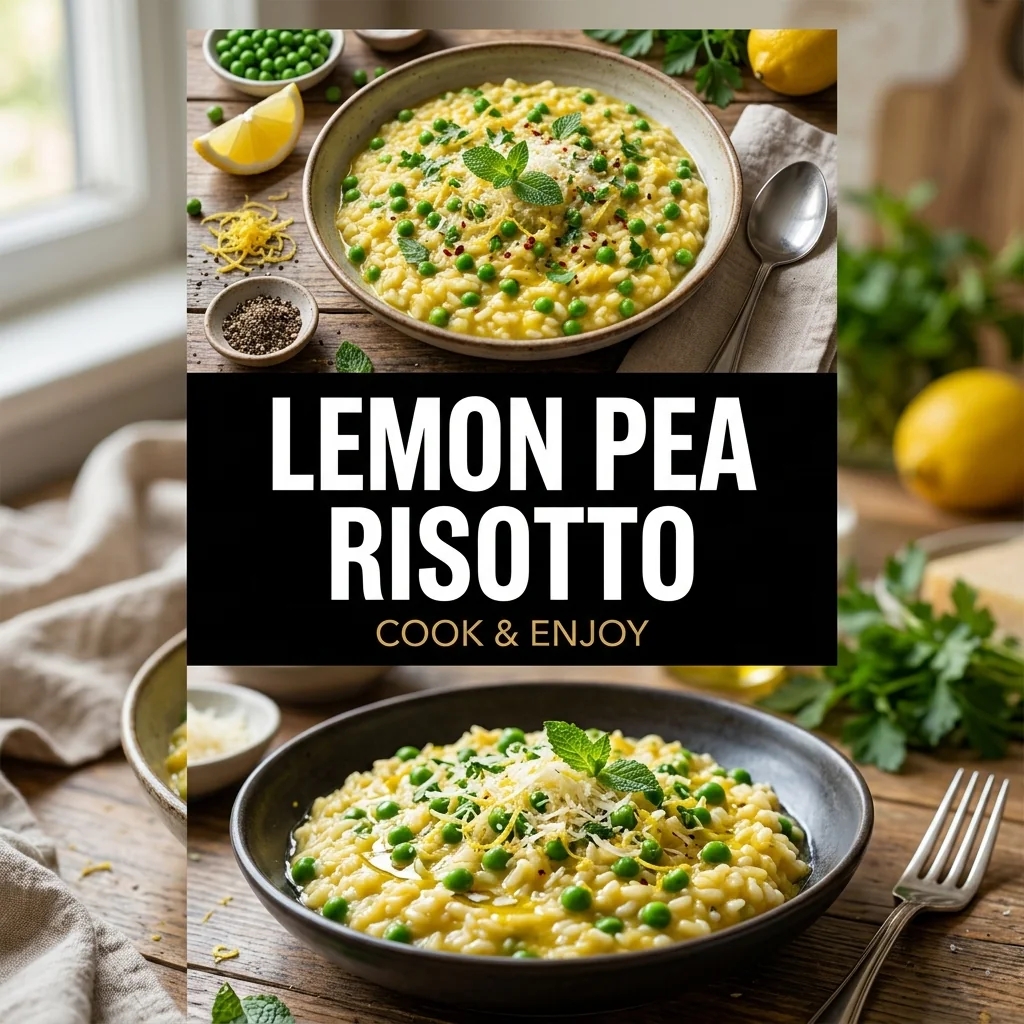
Lemon Pea Risotto captures the vibrant essence of spring cooking through a balanced play of acid, sweetness, and rich dairy emulsification. High-starch Arborio rice acts as the carrier for fragrant lemon oils extracted from fresh zest, while sweet tender peas introduce refreshing texture and vivid green color. Deglazing the toasted rice with crisp white wine creates a balanced foundation that cuts cleanly through the richness of butter and aged Parmigiano-Reggiano. Proper timing ensures the peas retain their tender pop and vibrant shade without overcooking. Finished with fresh flat-leaf parsley and a gentle resting period, this risotto delivers an elegant, creamy plate suitable for light dinners or celebratory starters.
Extracting Fresh Lemon Aroma Without Bitterness
Citrus flavor in risotto relies on the separation of zest and juice. The yellow peel contains volatile essential oils that carry floral citrus perfume without sharp acidity. Adding the finely grated zest near the end of cooking gently blooms these oils into the starch without scorching them. Conversely, adding fresh lemon juice exclusively during the final off-heat mantecatura stage protects the delicate acid profile from breaking down under heat, delivering a crisp, clean finish that balances the rich cheese.
Timing the Sweet Peas Correctly
Sweet peas contain delicate skins and high sugar concentrations that react poorly to prolonged boiling. When cooked in simmering broth for too long, their exterior wrinkles and their bright chlorophyll pigment degrades into a drab army green. By thawing frozen peas and introducing them only during the final three minutes of cooking, the peas heat through via gentle residual steam. This short window preserves their natural sweetness, plump spherical shape, and vibrant contrast against the pale ivory rice.
Emulsifying Butter and Cheese at the Finish
The defining hallmark of a classic risotto is its loose, flowing consistency. After the rice achieves an al dente bite, taking the pan off the burner stops active boiling. Vigorously incorporating cold butter cubes alongside finely grated Parmigiano-Reggiano creates a stable fat-in-water emulsion with the starchy broth. The mechanical agitation shears fat droplets into microscopic suspension, yielding a glossy, velvety coating without relying on heavy cream, which would mask the crisp lemon profile.
Before you start
Always zest your lemons before squeezing their juice. Use a microplane grater to remove only the outermost bright yellow rind, taking care to avoid the underlying white pith, which imparts harsh bitterness to delicate starch dishes. Thaw frozen peas in a small bowl of cool water and drain well before adding them; boiling them alongside the rice for 20 minutes would destroy their delicate sweet pop and turn them dull olive green.
THE RECIPE
Lemon Pea Risotto
4 servings · 15 minutes preparation · 35 minutes cooking · 5 minutes cooling, chilling or resting
Ingredients
Step-by-step instructions
- Pour 5 cups of broth into a 2-quart saucepan and bring to a gentle simmer over medium-low heat, then reduce the heat to low to keep it hot throughout cooking.
- Heat olive oil and 1 tablespoon butter in a 4-quart heavy Dutch oven over medium heat, add the minced shallot, and cook for 3 minutes until translucent before stirring in the garlic for 1 minute.
- Add 1 1/2 cups Arborio rice to the Dutch oven, stirring continuously for 2 to 3 minutes until the grain edges become translucent and faintly toasted while the centers remain chalky white.
- Pour in the white wine and stir constantly for about 2 minutes until the liquid has fully absorbed into the rice and the alcohol scent has cooked away.
- Add the warm broth one ladleful at a time, stirring frequently and waiting until liquid is absorbed before adding more, for about 18 to 22 minutes; fold in thawed sweet peas, lemon zest, salt, and pepper during the final 3 minutes of cooking.
- Once rice is tender with a slight core bite, remove the pot from heat, vigorously beat in remaining 2 tablespoons butter, lemon juice, and Parmesan, stir in parsley, and rest covered for 5 minutes.
Kitchen notes
Always zest your lemons before squeezing their juice. Use a microplane grater to remove only the outermost bright yellow rind, taking care to avoid the underlying white pith, which imparts harsh bitterness to delicate starch dishes. Thaw frozen peas in a small bowl of cool water and drain well before adding them; boiling them alongside the rice for 20 minutes would destroy their delicate sweet pop and turn them dull olive green.
Storage & make-ahead
Cool and refrigerate any leftover risotto in an airtight container within 2 hours. Keep refrigerated for up to 3 days. Risotto continues to set as it cools; to reheat, warm the rice gently in a saucepan over medium-low heat while stirring in a splash of warm broth or water to restore its creamy fluid texture, bringing the temperature to 165 F (74 C). Freezing is discouraged due to starch retrogradation.
An original recipe guide inspired by themes in our Pinterest research. Recipe has not been independently kitchen-tested. AI-generated image is illustrative; your finished dish may look different.
Frequently asked questions
Can I use fresh peas instead of frozen?
Yes, fresh shelled English peas work wonderfully. If using fresh peas, blanch them in boiling salted water for 90 seconds, plunge them into cold water to set their green color, drain thoroughly, and fold them into the risotto during the last 3 minutes.
What if my risotto absorbs liquid too fast?
If the rice absorbs broth rapidly while the grains remain hard, lower your stovetop burner heat. Cooking over excessively high heat evaporates liquid before it penetrates the grain core, leaving the outer starch mushy while the interior remains unpleasantly raw.
Is there a good non-alcoholic substitute for wine?
Yes, replace the 1/2 cup of dry white wine with an equal volume of warm broth combined with 1 additional teaspoon of fresh lemon juice or white wine vinegar. This provides the necessary acidity to balance the starch without using wine.