WHY MAKE IT
A little comfort, a lot of flavor.
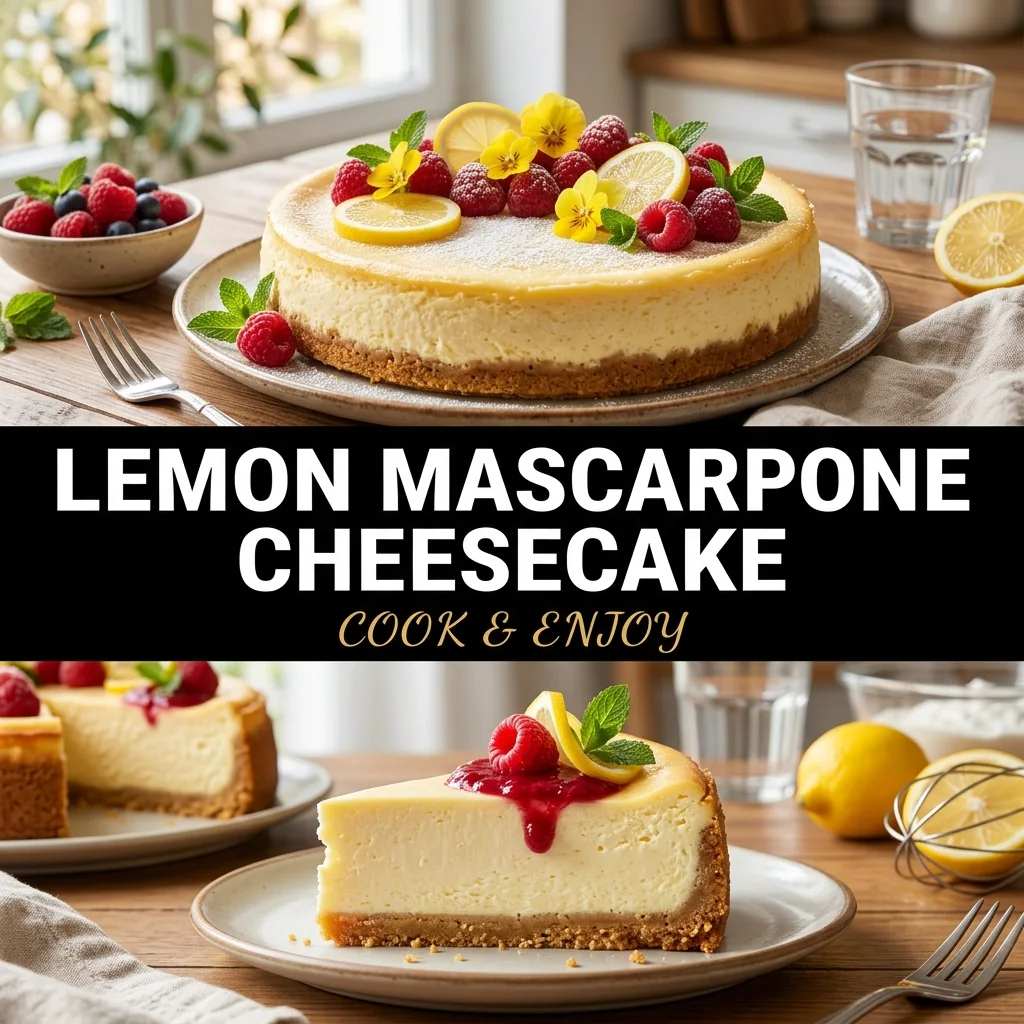
Blending traditional American cream cheese with Italian mascarpone transforms standard cheesecake into a cloud-like, silky dessert. Mascarpone introduces a milky sweetness and light consistency that offsets the dense, tangy nature of cultured cream cheese. Infused with three full tablespoons of fresh lemon zest and strained citrus juice, this cake balances lush dairy richness with clean acidity. The inclusion of a small amount of flour stabilizes the custard matrix without turning it heavy. Baked carefully in a water bath to ensure an even, pale top and delicate crumb, this lemon mascarpone cheesecake makes an elegant finale for spring gatherings, dinner parties, or weekend brunches.
The Chemistry of Lemon and Dairy
Lemon juice contributes acidity, while the zest supplies aromatic oils. Whisk the flour into the juice until smooth before adding it to the cheese mixture; this disperses the flour and avoids dry lumps. Add the eggs gently on low speed. The flour helps the custard set during baking; it does not neutralize the acid.
Handling Mascarpone Cheese
Unlike standard cream cheese, which is cultured and firm, mascarpone is created by curdling heavy cream with citric acid, yielding a rich cheese with a high fat content that varies by brand. Because of this delicate structure, aggressive beating with an electric mixer can quickly cause the emulsion to separate into butter granules and whey. To maintain its velvety texture, always use mascarpone at ambient room temperature, beat it only until unified with the standard cream cheese, and maintain mixer speeds strictly on low once the dairy has come together.
Essential Water Bath Protocol
A bain-marie is crucial for a mascarpone-based cake because the high fat content makes the custard particularly sensitive to scorching and curdling. The water bath caps ambient pan temperature at 212°F (100°C), providing slow, even heat transfer that allows the egg proteins to set smoothly without shrinking. Always use heavy-duty wide foil or a silicone baking sleeve to shield the springform pan, and ensure the hot water reaches roughly halfway up the pan sides to maintain consistent thermal protection throughout the bake.
Before you start
Mascarpone contains a significantly higher butterfat content than standard brick cream cheese, making it prone to curdling if over-beaten or mixed while cold. Bring both cheeses fully to room temperature and maintain low mixing speeds throughout the process. When zesting the lemons, use a microplane and grate only the bright yellow peel, completely avoiding the bitter white pith underneath.
THE RECIPE
Lemon Mascarpone Cheesecake
12 servings · 30 minutes preparation · 70 minutes cooking · 480 minutes cooling, chilling or resting
Ingredients
Step-by-step instructions
- Preheat the oven to 325°F (163°C). In a medium bowl, combine the graham cracker crumbs, 1/4 cup sugar, and melted butter until sandy. Press the mixture evenly into the base of a 9-inch springform pan. Bake for 10 minutes, then transfer to a rack to cool.
- Rub the fresh lemon zest into 1 cup of granulated sugar with clean fingertips in a small bowl until fragrant and moist. This releases the essential citrus oils from the zest, ensuring maximum natural flavor throughout the cheesecake filling.
- In a large bowl, beat the softened cream cheese and mascarpone on low speed just until combined until smooth and thoroughly combined. Add the lemon sugar and fine sea salt, beating on low speed until no grit remains and the texture is uniform.
- Whisk together the fresh lemon juice, vanilla extract, and all-purpose flour in a small cup until no dry flour remains, then blend into the cheese mixture on low speed. Add the room-temperature eggs one at a time, mixing briefly after each addition just until incorporated.
- Tightly wrap the exterior bottom of the springform pan in two layers of heavy-duty aluminum foil. Pour the citrus batter over the cooled crust. Place the pan into a large roasting pan, then place the assembly onto the center rack of your oven.
- Pour boiling water into the roasting pan to reach halfway up the sides of the springform. Bake at 325°F (163°C) for 50 to 60 minutes, until the outer rim is set and slightly golden but the middle maintains a soft, uniform jiggle when gently tapped.
- Turn off the oven, prop the door open slightly, and allow the cheesecake to rest undisturbed for 60 minutes. Remove the pan from the water bath, peel away the foil, cool on a wire rack for no more than 1 hour, then refrigerate for at least 6 hours before slicing.
Kitchen notes
Mascarpone contains a significantly higher butterfat content than standard brick cream cheese, making it prone to curdling if over-beaten or mixed while cold. Bring both cheeses fully to room temperature and maintain low mixing speeds throughout the process. When zesting the lemons, use a microplane and grate only the bright yellow peel, completely avoiding the bitter white pith underneath.
Storage & make-ahead
Keep the cheesecake tightly covered in the refrigerator for up to 4 days. Mascarpone softens faster at room temperature than standard cream cheese, so return leftovers to refrigeration immediately after slicing. This recipe can be made up to two days ahead of serving.
An original recipe guide inspired by themes in our Pinterest research. Recipe has not been independently kitchen-tested. AI-generated image is illustrative; your finished dish may look different.
Frequently asked questions
Can I make this cheesecake entirely with mascarpone?
Using 100% mascarpone creates an overly rich, soft filling that lacks structural stability when sliced. Combining equal parts standard cream cheese and mascarpone provides the perfect compromise of creamy Italian texture and reliable sliceable density.
Can I use bottled lemon juice instead of fresh?
Bottled lemon juice lacks the vibrant, floral aromatics of fresh citrus and often contains preservatives that impart an artificial aftertaste. For optimal flavor and the crucial zest, always choose fresh, firm lemons.
How do I know when the mascarpone cheesecake is fully baked?
Look for set, matte edges extending about two inches inward from the pan rim. The center two to three inches should still wobble slightly like set gelatin when the pan is gently nudged, firming completely during the extended chilling phase.