WHY MAKE IT
A little comfort, a lot of flavor.
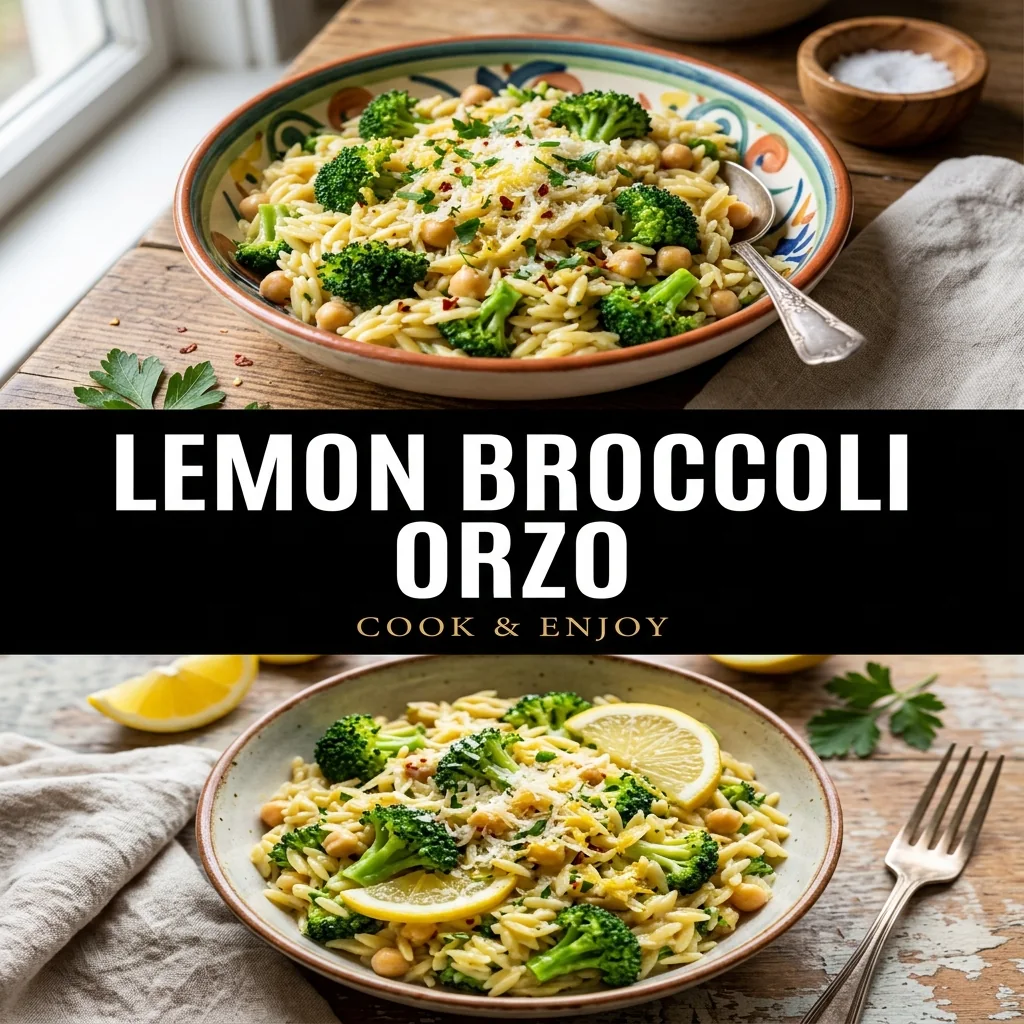
Lemon Broccoli Orzo marries the comforting starchiness of rice-shaped pasta with the brightness of citrus and green vegetables. Using a risotto-like technique, dry orzo is toasted in olive oil alongside sweet yellow onions and aromatic garlic before simmering in savory broth. This toasting step stabilizes the starch granules, preventing the grains from turning gummy while lending an underlying nuttiness. Adding tender broccoli florets toward the end of the simmer steams them cleanly within the starch-laden broth, eliminating the need to wash a separate pot. Finished with sharp Parmesan cheese, cold-pressed olive oil, and vibrant lemon zest and juice, the pan turns silky, forming a naturally creamy pan emulsion without heavy dairy.
The Power of Dry Toasting Orzo
Orzo is often treated as simple boiled pasta, but cooking it pilaf-style unlocks far superior texture. Tossing the dry grains in warm olive oil before introducing liquid browns the exterior starch coat slightly. This thermal reaction generates complex nutty aromas while tightening the pasta surface, ensuring the finished grains hold distinct separation rather than clumping into a solid mass. It also enables the starch released during the simmer to create a glossy, clingy sauce.
Incorporating Broccoli at the Right Moment
Broccoli easily overcooks into an unappealing olive-drab puree if subjected to prolonged boiling. By chopping the florets small and folding them into the orzo midway through the simmering cycle, the vegetable steams in the trapped broth vapor. The broccoli cooks through in just five minutes, retaining its vivid emerald hue, vital crunch, and pleasant sweetness. Peeling and mincing the upper stems alongside the florets maximizes textural contrast throughout the dish.
Finishing with Emulsified Citrus and Cheese
True balance in this dish relies on finishing off the flame. Boiling fresh lemon juice turns its bright acidity harsh and bitter; folding it in at the end preserves fragrant floral top notes. Pairing the juice with fine lemon zest distributes essential oils throughout the pasta. As finely grated Parmesan and a final thread of extra-virgin olive oil meet the remaining starchy broth, vigorous stirring creates a light, luxurious emulsion that coats each grain effortlessly.
Before you start
Cutting broccoli into uniformly small florets—no larger than the tip of a thumb—ensures it steams to tender-crisp perfection in the final five minutes of cooking without turning drab or waterlogged. Include the tender peeled stems diced finely to reduce waste and add a crisp sweetness that complements the rich Parmesan and tart lemon.
THE RECIPE
Lemon Broccoli Orzo
4 servings · 15 minutes preparation · 20 minutes cooking · 5 minutes cooling, chilling or resting
Ingredients
Step-by-step instructions
- Heat 2 tablespoons extra-virgin olive oil in a heavy 12-inch straight-sided sauté pan over medium heat, add the diced onion and 0.5 teaspoon kosher salt, and sweat for 4 minutes until soft and translucent.
- Add 4 minced cloves garlic and 0.5 teaspoon crushed red pepper flakes, cooking for 1 minute until fragrant before adding 1.5 cups dry orzo pasta directly into the aromatics.
- Toast the dry orzo in the hot oil, stirring continuously for 2 minutes until grains turn lightly golden and give off a nutty aroma.
- Pour in 3.5 cups broth, bring to a brisk boil over medium-high heat, then lower the flame to medium-low, cover with a tight lid, and simmer undisturbed for 5 minutes.
- Uncover the pan, stir in the remaining 0.5 cup broth and 4 cups finely chopped broccoli florets and stems, pressing the broccoli gently down into the simmering liquid.
- Re-cover the pan and simmer over medium-low heat for 4 to 5 minutes until the orzo is tender al dente and the broccoli is bright green and fork-tender.
- Remove from heat, uncover, and vigorously fold in 1 tablespoon lemon zest, 3 tablespoons lemon juice, 0.75 cup grated Parmesan, remaining 1 tablespoon olive oil, remaining 0.5 teaspoon salt, black pepper, and chopped parsley until a creamy emulsion coats every grain, then rest 5 minutes before serving.
Kitchen notes
Cutting broccoli into uniformly small florets—no larger than the tip of a thumb—ensures it steams to tender-crisp perfection in the final five minutes of cooking without turning drab or waterlogged. Include the tender peeled stems diced finely to reduce waste and add a crisp sweetness that complements the rich Parmesan and tart lemon.
Storage & make-ahead
Store chilled portions in an airtight glass or plastic container in the refrigerator within 2 hours of cooking. Keeps well for up to 3 days. Orzo absorbs free moisture as it rests, so when reheating, add 2 tablespoons of water or broth per cup of pasta. Reheat in a small skillet over medium-low heat until steaming and thoroughly heated through to 165°F (74°C).
An original recipe guide inspired by themes in our Pinterest research. Recipe has not been independently kitchen-tested. AI-generated image is illustrative; your finished dish may look different.
Frequently asked questions
Can I use frozen broccoli florets instead of fresh?
Yes, but thaw and thoroughly pat them dry first. Chop them into bite-sized pieces and fold them in during the final 3 minutes of cooking rather than 5, as frozen broccoli has already been blanched and will turn mushy if cooked too long.
What if the orzo absorbs all the broth before becoming tender?
Keep an extra 0.5 cup of warm broth or water nearby. If the skillet looks dry while the pasta still tastes chalky, stir in 2 to 3 tablespoons of warm liquid at a time, cover, and cook an additional 2 minutes until tender.
Is Pecorino Romano a suitable substitute for Parmesan?
Yes, Pecorino Romano makes an excellent substitute, though it is noticeably saltier and sharper than Parmesan. Reduce the added kosher salt by half a teaspoon initially, then adjust seasoning to taste after incorporating the cheese.