WHY MAKE IT
A little comfort, a lot of flavor.
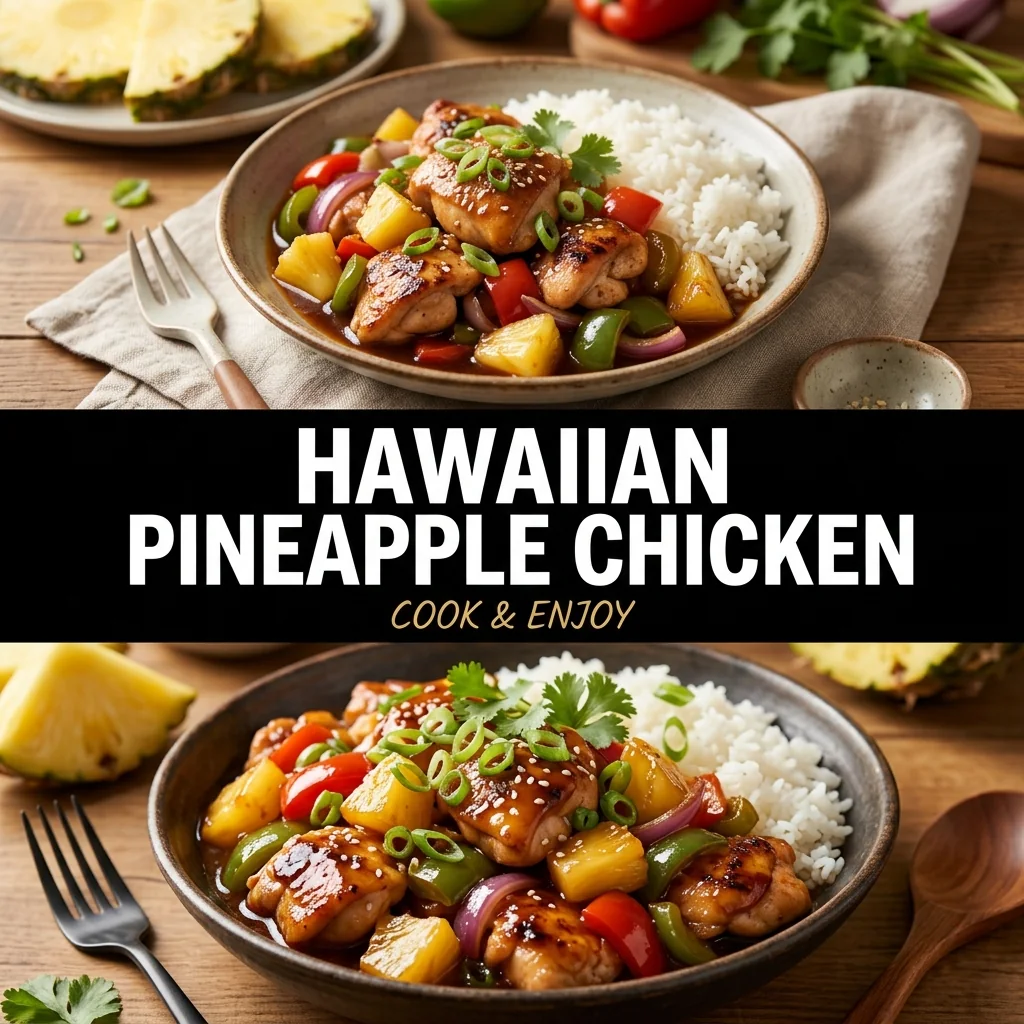
Hawaiian pineapple chicken balances sweet fruit flavors with deep savory undertones, making it a reliable weeknight dinner option that comes together in a single pan. Using boneless chicken thighs instead of breasts ensures the meat remains juicy and forgiving during high-heat searing and simmering. Pineapple juice provides natural acidity and sweetness that tenderizes the chicken, while fresh ginger, minced garlic, and soy sauce anchor the sauce with warmth and umami. Red and green bell peppers add visual contrast and a pleasant vegetable crunch against the tender meat. Because the glaze thickens rapidly right in the skillet, you achieve restaurant-style glossy coating without needing a separate saucepan or deep fryer.
Balancing the Glaze
The key to a successful sweet-and-sour profile is calibrating sweetness against salt and acidity. Commercial barbecue or sweet-and-sour sauces can be cloying, but building the glaze directly from reserved pineapple juice, rice vinegar, soy sauce, and a touch of ketchup provides measured tartness. Ketchup delivers both tomato sweetness and vinegar punch alongside pectin, helping emulsify the sauce. If your canned pineapple contains heavy syrup instead of natural juice, reduce the brown sugar by half to keep the finished skillet savory and balanced rather than dessert-sweet.
Selecting Chicken Cuts
Boneless, skinless chicken thighs are strongly recommended for this recipe due to their higher fat content and resilient muscle structure. Thighs withstand high-temperature searing without drying out and release savory drippings that enrich the vegetable sauté. If you substitute chicken breast tenderloins or cubed breast meat, cut the pieces slightly larger (around 2 inches) and shorten the initial sear by one minute per side. Breasts dry out quickly once overcooked, so monitor internal temperature closely and pull the skillet from heat as soon as it hits 165°F (74°C).
Accompaniments and Plating
Because the sauce is glossy, rich, and abundant, serve this chicken over a neutral starch that absorbs liquid effectively. Steamed jasmine rice, short-grain sushi rice, or brown rice are traditional and practical choices. For a lower-carbohydrate alternative, cauliflower rice or sautéed shredded cabbage work well. To assemble a vibrant dinner plate, mound hot rice in broad shallow bowls, spoon the glazed chicken, peppers, and pineapple generously over the top, and finish with a scattering of freshly sliced scallions or toasted sesame seeds for crunch.
Before you start
For the best crust on the chicken, pat pieces completely dry with paper towels before seasoning. If moisture remains on surface, meat will steam rather than brown. Using canned pineapple in 100% juice provides convenient, measured sweet juice for the glaze; if using fresh fruit, supplement with store-bought unsweetened pineapple juice. Avoid boiling aggressively after adding cornstarch, which can weaken starch bonds and thin sauce.
THE RECIPE
Hawaiian Pineapple Chicken
4 servings · 20 minutes preparation · 25 minutes cooking · 5 minutes cooling, chilling or resting
Ingredients
Step-by-step instructions
- Season cut chicken thighs uniformly with kosher salt and black pepper. Heat neutral oil in a 12-inch heavy-bottomed skillet or cast-iron pan over medium-high heat until shimmering. Place chicken pieces in a single layer, ensuring the pan is not overcrowded, and sear undisturbed for 4 to 5 minutes until deep golden brown on the bottom.
- Turn chicken pieces over and sear the opposite side for 3 minutes to establish color. The meat will still be partially raw in the center at this stage. Transfer seared chicken and any released juices to a clean plate and set aside, retaining rendered oil in the skillet.
- Reduce burner heat to medium. Add red and green bell pepper chunks to skillet and sauté for 3 minutes until slightly tender-crisp. Add minced garlic and grated ginger, stirring constantly for 45 to 60 seconds until fragrant while taking care not to burn the aromatics.
- Whisk reserved 1/2 cup pineapple juice, low-sodium soy sauce, tomato ketchup, brown sugar, and rice vinegar together in a small bowl. Pour liquid mixture directly into the hot skillet, scraping up browned fond from the bottom with a wooden spoon. Bring sauce mixture to a gentle, steady simmer.
- Return seared chicken and collected juices to skillet along with drained pineapple chunks. Stir ingredients to coat in sauce, reduce heat to medium-low, cover loosely with a lid, and simmer for 5 to 6 minutes until chicken registers 165°F (74°C) on an instant-read thermometer.
- Give cornstarch slurry a quick stir and drizzle it slowly into the simmering skillet while stirring continuously. Cook uncovered for 1 to 2 minutes until sauce turns clear, glossy, and thick enough to coat the back of a spoon.
- Remove skillet from heat source completely and allow dish to rest for 5 minutes off the burner so sauce stabilizes and chicken reabsorbs juices. Scatter sliced green onions over top and serve immediately while hot.
Kitchen notes
For the best crust on the chicken, pat pieces completely dry with paper towels before seasoning. If moisture remains on surface, meat will steam rather than brown. Using canned pineapple in 100% juice provides convenient, measured sweet juice for the glaze; if using fresh fruit, supplement with store-bought unsweetened pineapple juice. Avoid boiling aggressively after adding cornstarch, which can weaken starch bonds and thin sauce.
Storage & make-ahead
Store leftovers in an airtight glass or plastic container in the refrigerator for up to 3 days. Reheat gently in a covered skillet over medium-low heat with a splash of water or broth to loosen sauce, or microwave in 45-second intervals until warmed to 165°F (74°C). Not recommended for prolonged freezer storage as bell peppers turn soft and watery upon thawing. Refrigerate perishable leftovers within 2 hours (within 1 hour above 90°F/32°C), using shallow containers. If reheating, heat throughout to 165°F (74°C).
An original recipe guide inspired by themes in our Pinterest research. Recipe has not been independently kitchen-tested. AI-generated image is illustrative; your finished dish may look different.
Frequently asked questions
Can I use fresh pineapple instead of canned?
Yes, you can use fresh pineapple chunks. However, you will need to purchase separate 100% unsweetened pineapple juice to provide the 1/2 cup required for the sauce, as fresh fruit will not release enough liquid during prep.
Why did my sauce become watery after thinning out?
Cornstarch breaks down if boiled excessively or stirred too aggressively once thickened. Simmer the glaze gently for only 1 to 2 minutes after adding the slurry, then remove the pan from heat immediately.
Can I make this dish ahead of time for meal prep?
Yes, it stores well for up to 3 days in the refrigerator. When reheating, add 1 to 2 tablespoons of water or chicken broth to help restore the glossy consistency of the chilled sauce.