WHY MAKE IT
A little comfort, a lot of flavor.
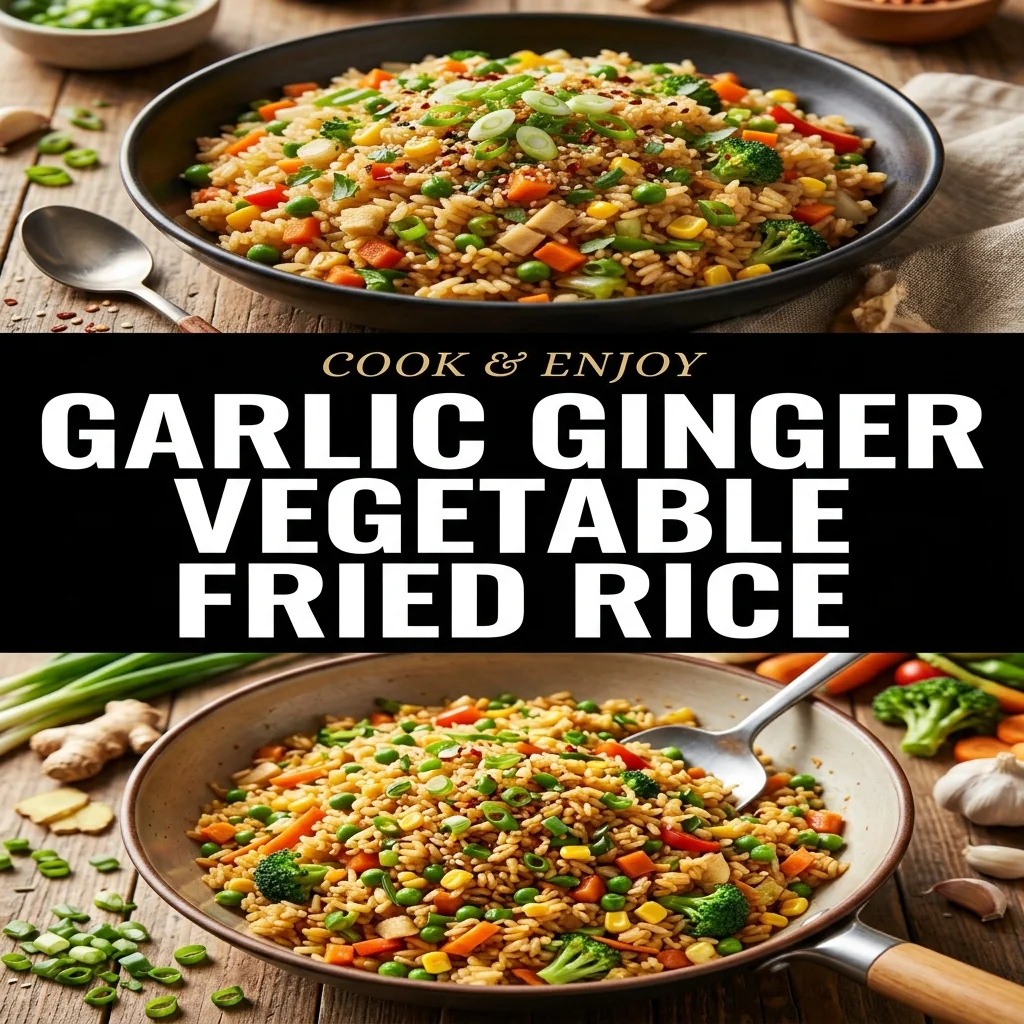
A successful stir-fried rice relies on extreme burner heat, minimal pan moisture, and rapid execution. This garlic and ginger iteration elevates humble pantry ingredients into a cohesive, aromatic meal by layering pungent alliums with crisp-tender root vegetables and tender green peas. Chilled jasmine or standard long-grain rice provides the ideal canvas, offering dry, distinct grains that readily absorb savory soy sauce and nutty toasted sesame oil without softening into mush. By cooking the eggs separately and reintroducing them at the final stage, their delicate, pillowy texture remains intact alongside the deeply toasted, wok-kissed rice grains.
Rice Selection and Dehydration
Long-grain varieties like jasmine or standard long-grain white rice are ideal because they contain less amylopectin than short-grain varieties, meaning they cook up less sticky. Storing cooked rice uncovered or loosely covered in the refrigerator for 12 to 24 hours draws out residual steam and hardens the grains. When these chilled, firm grains hit hot oil, their starch crystallizes rapidly, producing the distinct, bouncy mouthfeel characteristic of proper takeout-style fried rice rather than a wet, gummy casserole.
Heat Management in Home Skillets
Domestic stove burners rarely reach the intense British Thermal Unit output of commercial wok ranges. To compensate, preheat a heavy 12-inch cast-iron skillet or carbon-steel wok until the metal is noticeably hot before adding oil. Cook in defined stages: sear the eggs and remove them, brown the firm vegetables, briefly bloom the aromatics, and finally fry the rice. Overcrowding the pan with wet ingredients drops the surface temperature, boiling the rice in escaping liquids rather than searing it.
Balancing the Seasoning Profile
The sauce mixture relies on dark savory notes balanced by aromatic ginger and sharp white pepper. White pepper provides a subtle, earthy heat that permeates the grains without overwhelming visual presentation with large black flecks. Pouring sauce around the outer rim of the scorching wok rather than dumping it cold onto the center caramelizes the sugars against the hot metal. This brief sizzle, known as wok-singeing, imparts depth before the liquid coats the tumbling grains.
Before you start
Day-old cold rice is mandatory for successful fried rice. Freshly cooked rice holds excess surface starch and steam, which breaks down into sticky paste when agitated in a wok. Chilling cooked grains overnight dehydrates their outer layer, firming the starch structure so individual grains fry crisp rather than steam. If short on time, spread freshly cooked rice onto a sheet pan and freeze for 20 minutes to evaporate surface moisture.
THE RECIPE
Garlic Ginger Vegetable Fried Rice
4 servings · 15 minutes preparation · 15 minutes cooking
Ingredients
Step-by-step instructions
- Remove the chilled, cooked white rice from the refrigerator. Use clean hands or a spatula to gently break up any large compacted clumps into individual grains, setting the bowl adjacent to the stove.
- In a small bowl, whisk together the low-sodium tamari, oyster sauce, and ground white pepper until smoothly integrated. Keep this sauce mixture near the cooking station alongside your prepared aromatics.
- Set a 14-inch flat-bottomed wok or large 12-inch heavy skillet over high heat. Add 1 tablespoon of neutral oil; once shimmering and faintly smoking, pour in the beaten eggs, swirl briefly, scramble for 45 to 60 seconds until soft curds set, then transfer eggs to a clean plate.
- Return the empty wok to high heat and add the remaining 1 tablespoon of neutral oil along with 1 tablespoon of sesame oil. Tumble in the diced yellow onion and carrots, stir-frying continuously for 3 minutes until the carrots begin to tenderize.
- Add the minced garlic, grated ginger, and scallion whites to the center of the pan. Stir vigorously for 30 to 45 seconds until intensely fragrant, being careful not to let the minced garlic scorch against the hot metal surface.
- Add the crumbled chilled rice and thawed peas into the wok, spreading the grains across the hot surface. Press the rice down firmly with a spatula for 1 minute to allow the bottom layer to toast and crisp slightly.
- Toss the contents vigorously over high heat, pouring the prepared sauce mixture evenly around the perimeter of the wok so it sizzles on contact before coating the grains. Stir-fry for 2 to 3 minutes until the rice turns uniformly golden and steaming.
- Return the cooked eggs to the wok, using the edge of the spatula to break them into bite-sized pieces throughout the rice. Drizzle with the remaining 1 tablespoon of sesame oil, fold in the reserved scallion greens, and remove from the heat immediately to serve.
Kitchen notes
Day-old cold rice is mandatory for successful fried rice. Freshly cooked rice holds excess surface starch and steam, which breaks down into sticky paste when agitated in a wok. Chilling cooked grains overnight dehydrates their outer layer, firming the starch structure so individual grains fry crisp rather than steam. If short on time, spread freshly cooked rice onto a sheet pan and freeze for 20 minutes to evaporate surface moisture.
Storage & make-ahead
Cool any leftovers quickly and transfer them into an airtight container within 2 hours. Keep refrigerated at or below 40°F (4°C) for up to 3 days. Reheat in a smoking hot skillet with a teaspoon of oil or microwave covered with a damp paper towel until hot throughout, registering an internal temperature of at least 165°F (74°C).
An original recipe guide inspired by themes in our Pinterest research. Recipe has not been independently kitchen-tested. AI-generated image is illustrative; your finished dish may look different.
Frequently asked questions
Can I use freshly cooked rice if I do not have leftovers?
Yes, but you must dry it first. Spread freshly cooked hot rice onto a large rimmed baking sheet in a thin layer and place it uncovered in the refrigerator or freezer for 20 to 30 minutes until thoroughly chilled and dry to the touch.
What if I do not have a carbon steel wok?
A large 12-inch stainless-steel or heavy cast-iron skillet works effectively. Cast iron retains high heat exceptionally well, which helps mimic wok cooking on conventional domestic kitchen stovetops. Avoid using lightweight non-stick pans over extreme heat.
Can I add protein like chicken, shrimp, or tofu?
Yes. Sear your chosen protein separately in hot oil until fully cooked (165°F for poultry, 145°F for shrimp), transfer it to a plate, and fold it back into the fried rice during the final minute of cooking alongside the eggs.