WHY MAKE IT
A little comfort, a lot of flavor.
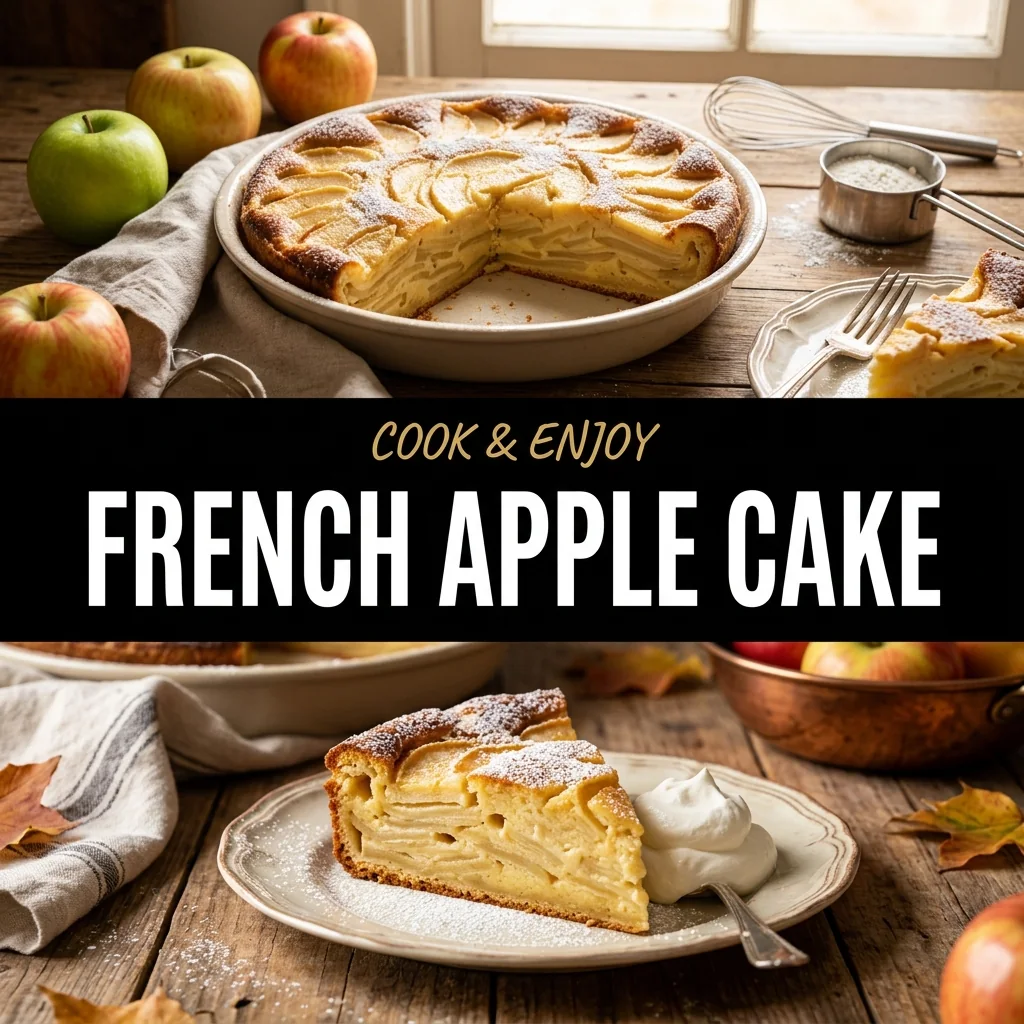
French apple cake, or gâteau aux pommes, epitomizes the understated rustic elegance of Parisian home baking. Unlike standard American butter cakes that feature fruit scattered sparsely through dense sponge, this French classic flips the proportion entirely: it features heaps of sliced apples bound together by a minimalist, egg-rich batter. During baking, the small amount of flour and butter transforms into a velvety custard-like crumb between the fruit layers, while the exposed surface caramelizes into a crisp, delicate crust. Scented with vanilla and dark rum, the cake is neither overwhelmingly sweet nor heavy, making it equally suited for afternoon tea or an elegant dessert served with lightly whipped cream.
Understanding the High Fruit Ratio
The defining characteristic of gâteau invisible or classic French apple cake is the near-absence of visible flour cake matrix. When you fold 900 grams of sliced apples into the batter, the mixture will appear dry, disjointed, and seemingly impossible to bake. Do not add milk or additional butter. As the apples heat in the oven, pectin breaks down and natural juices escape, mingling with the egg-rich batter. The flour gelatinizes around these juices, setting into an unctuous custard that suspends the softened fruit slices into a sliceable, tender mosaic.
The Impact of Rum and Fat Emulsion
Dark rum or apple brandy (Calvados) serves a dual functional purpose in this recipe. Beyond offering its warm oak and molasses aroma, the alcohol volatility enhances aromatic dispersion across the palate. Incorporating lukewarm melted butter directly into the whipped eggs and sugar requires a steady, low-speed drizzle. This creates a temporary emulsion that coats flour proteins upon introduction, minimizing gluten web formation. The resulting crumb remains exceptionally tender, yielding easily beneath the gentle pressure of a dessert fork.
Testing for Doneness in Custard Cakes
Judging doneness in a cake packed with moist fruit requires close observation. A standard toothpick test can mislead the baker: piercing a tender, juicy apple slice can look like undercooked batter. Look instead for visual cues across the top: the crust should turn a deep amber-gold and pull slightly away from the perimeter of the springform ring. When pressed gently in the center, the cake should feel resilient and springy, not squishy or liquid underneath the top crust.
Before you start
Choose a combination of firm, contrasting apple varieties to give the cake depth and structural stability. Combining a sharp, firm Granny Smith with a sweet, aromatic Honeycrisp or Braeburn prevents one-dimensional sweetness. Avoid soft varieties like McIntosh or Red Delicious; as they heat, their cellular structure collapses into watery applesauce, ruining the cake's tender, layered custard architecture.
THE RECIPE
French Apple Cake
8 servings · 25 minutes preparation · 50 minutes cooking · 30 minutes cooling, chilling or resting
Ingredients
Step-by-step instructions
- Position an oven rack in the center position and preheat the oven to 175 C (350 F). Generously butter a 23 cm (9-inch) round springform pan or cake pan, line the bottom with a round of parchment paper, and dust the buttered sides lightly with flour, tapping out any excess.
- In a medium mixing bowl, whisk together the all-purpose flour, baking powder, and fine sea salt until thoroughly blended, then set the dry ingredients aside. In a large mixing bowl, beat the 3 large room-temperature eggs with an electric hand mixer on high speed for 2 minutes until foamy and pale.
- Gradually add the granulated sugar to the eggs, beating continuously on medium-high speed for another 2 to 3 minutes until the ribbon stage is reached, where the mixture falls in thick ribbons and holds its shape briefly. Beat in the pure vanilla extract and dark rum until well incorporated.
- Lower the mixer speed to low and slowly drizzle in the cooled melted butter until emulsified. Sift half of the whisked dry flour mixture over the wet ingredients, fold gently with a flexible spatula, then add the remaining flour, folding just until no visible dry streaks remain; do not overmix.
- Add the peeled, cored, and thinly sliced apples into the bowl, folding them thoroughly with the spatula so that every apple slice is coated with the light batter. The mixture will seem overwhelmingly packed with apples with very little batter visible, which is the intended traditional texture.
- Scrape the batter into the prepared springform pan, using an offset spatula to press the apple slices down firmly into an even, level layer. Place the pan in the preheated oven and bake at 175 C (350 F) for 50 to 55 minutes until the top is deeply golden brown.
- Check doneness by inserting a thin knife or metal cake tester into the center; it should emerge clean without wet batter clinging to it, though encountering soft cooked apples is normal. Transfer the pan to a wire cooling rack and allow the cake to cool undisturbed for 30 minutes.
- Run a thin, flexible paring knife carefully around the interior perimeter of the pan to release any edges, then unclip and remove the springform ring. Slide the cake onto a flat serving platter, allow it to cool to room temperature or lukewarm, and dust the top with powdered sugar through a fine sieve before slicing into 8 wedges.
Kitchen notes
Choose a combination of firm, contrasting apple varieties to give the cake depth and structural stability. Combining a sharp, firm Granny Smith with a sweet, aromatic Honeycrisp or Braeburn prevents one-dimensional sweetness. Avoid soft varieties like McIntosh or Red Delicious; as they heat, their cellular structure collapses into watery applesauce, ruining the cake's tender, layered custard architecture.
Storage & make-ahead
Store leftover cake in an airtight container or under a cake dome at room temperature for up to 2 days, or refrigerate for up to 5 days. To reheat, warm individual slices in a 150 C (300 F) oven for 8 minutes to revive the butter crumb. This cake does not freeze well due to high moisture in the fruit.
An original recipe guide inspired by themes in our Pinterest research. Recipe has not been independently kitchen-tested. AI-generated image is illustrative; your finished dish may look different.
Frequently asked questions
Can I omit the dark rum or substitute it?
Yes. If avoiding alcohol, replace the rum with an equal measure of pure apple cider, whole milk, or fresh orange juice. The alcohol cooks off largely in the oven, but fruit juice maintains the batter's hydration balance.
Why did my cake stick to the springform pan?
Apples release natural sugars that caramelize and weld to hot metal surfaces. Always butter the pan generously, line the base with parchment paper, dust the sides with flour, and run a thin paring knife around the edges before unclipping the ring.
Can I slice the apples using a mandoline?
Yes, a mandoline is ideal for creating consistent 0.5 cm slices quickly. Avoid slicing them paper-thin, however, as paper-thin apples melt completely into mush; slightly thicker slices provide the distinct layered texture that defines this traditional cake.