WHY MAKE IT
A little comfort, a lot of flavor.
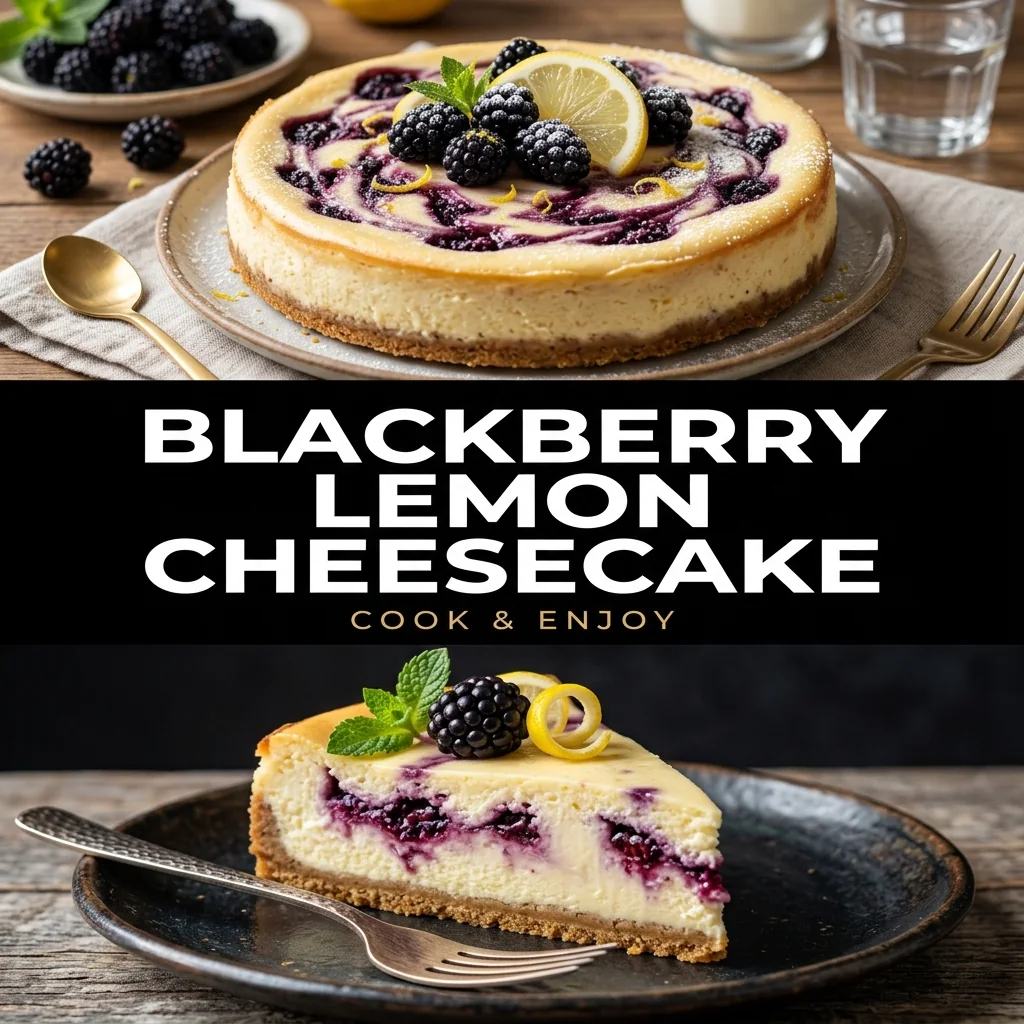
Blackberry Lemon Cheesecake presents an exquisite balance of rich dairy fats, vibrant citrus oils, and dark, juicy summer fruit. A base of crisp, buttery graham cracker crumbs anchors a dense, velvety custard filling made from pure cream cheese, real sour cream, and fresh lemon zest. Baking the cheesecake inside a gentle water bath ensures slow, even heat penetration, safeguarding the delicate egg proteins from curdling and preventing surface fissures. Once chilled to perfection, the tangy citrus profile is crowned by a glossy stovetop compote of simmered fresh blackberries. Each bite delivers contrasting layers of crisp crust, creamy tartness, and aromatic berry sweetness, creating an impressive centerpiece dessert suitable for celebrations and formal dinner gatherings.
The Science of a Water Bath
Baking custard-based cheesecakes in a bain-marie, or water bath, provides an insulating buffer against severe oven fluctuations. The water moderates heat around the lower pan walls, helping the outer filling cook more gently while the center sets. This gentle cooking environment prevents the perimeter from overbaking while the interior sets. Heavy-duty aluminum foil wrapped tightly around the outside of the springform pan acts as an essential shield against water seeping into the crisp graham cracker crust.
Extracting Pure Citrus Flavor
Lemon zest contains volatile essential oils that carry pure citrus aroma without adding moisture or extreme acidity that could curdle cream cheese during early mixing. Finely grate only the yellow outer flavedo, avoiding the bitter white pith beneath. Incorporating both zest and measured fresh lemon juice creates a layered flavor profile where the zest provides lingering floral perfume and the juice cuts through the richness of the cheese. Use softened cream cheese and scrape the bowl thoroughly to help the batter mix smoothly.
Mastering Blackberry Compote Consistency
Fresh blackberries provide a natural balance of tart juice and pectin that thickens nicely when cooked with a small slurry of cornstarch and sugar. Stir the berries over medium heat just until they burst and release their deep purple juice, but avoid over-mashing so visible fruit textures remain intact. The compote must cool completely to room temperature before topping the cold cheesecake; applying warm compote causes the chilled top layer of cream cheese to melt, resulting in a cloudy, runnier presentation.
Before you start
Ensure all batter ingredients, especially the cream cheese, sour cream, and eggs, sit until just softened before mixing. Cold ingredients create lumps that require excessive beating to smooth out, incorporating air pockets that make the baked cheesecake inflate and crack. Beat only on low speed once eggs are introduced to keep the crumb silky and dense.
THE RECIPE
Blackberry Lemon Cheesecake
12 servings · 30 minutes preparation · 85 minutes cooking · 420 minutes cooling, chilling or resting
Ingredients
Step-by-step instructions
- Preheat the oven to 325 degrees Fahrenheit (163 degrees Celsius). Grease a 9-inch springform pan with nonstick spray. In a bowl, combine graham cracker crumbs, 1/4 cup sugar, and melted butter until moistened. Press firmly into the pan bottom and bake for 10 minutes, then cool on a wire rack.
- Wrap the exterior bottom and sides of the cooled springform pan securely with two layers of heavy-duty aluminum foil to prevent water intrusion. Using a stand mixer fitted with the paddle attachment on medium-low speed, beat the softened cream cheese and 1 1/4 cups sugar for 3 minutes until smooth.
- Add the lemon zest, fresh lemon juice, vanilla extract, and sour cream to the cream cheese mixture. Beat on low speed for 1 minute until completely homogeneous, stopping to scrape down the sides and bottom of the mixing bowl with a rubber spatula to eliminate any unmixed cream cheese pockets.
- Add the room-temperature eggs one at a time, beating on lowest speed just until each yolk disappears into the batter. Avoid overmixing to prevent whipping excess air into the batter, which causes cracks during baking. Pour the cheesecake batter evenly into the prepared crust in the springform pan.
- Place the foil-wrapped pan inside a large roasting pan. Set on the middle oven rack and carefully pour boiling water into the roasting pan until it reaches halfway up the sides of the springform pan. Bake at 325 degrees Fahrenheit (163 degrees Celsius) for 65 to 70 minutes. Continue baking as needed until the center reaches 160°F (71°C) on an instant-read thermometer; use temperature rather than the clock alone.
- Check for doneness: the outer edges should appear set and slightly puffed, while the 2-inch center area retains a gentle jiggle when the pan is nudged, registering 160 degrees Fahrenheit (71 degrees Celsius). Turn off the oven, prop the door ajar with a wooden spoon, and cool inside for 60 minutes.
- Remove the pan from the water bath, strip off the foil, and cool on a wire rack at room temperature for 60 minutes. Transfer the cheesecake to the refrigerator and chill uncovered for at least 300 minutes (5 hours) or overnight until thoroughly cold and fully set.
- While chilling, prepare the compote: combine fresh blackberries, 1/4 cup sugar, cornstarch, and cold water in a small saucepan over medium heat. Simmer for 4 to 5 minutes, crushing berries gently with a spoon until thickened. Cool compote completely, spoon over the chilled cheesecake, slice, and serve.
Kitchen notes
Ensure all batter ingredients, especially the cream cheese, sour cream, and eggs, sit until just softened before mixing. Cold ingredients create lumps that require excessive beating to smooth out, incorporating air pockets that make the baked cheesecake inflate and crack. Beat only on low speed once eggs are introduced to keep the crumb silky and dense.
Storage & make-ahead
Store the finished cheesecake tightly covered in the refrigerator within 2 hours of slicing. It stays fresh for up to 4 days. Keep the blackberry compote stored separately in a glass jar and spoon over individual slices right before serving to maintain an intact crust and clean presentation. Freezing whole cheesecake without compote is safe for up to 1 month.
An original recipe guide inspired by themes in our Pinterest research. Recipe has not been independently kitchen-tested. AI-generated image is illustrative; your finished dish may look different.
Frequently asked questions
Why did my cheesecake crack on top?
Cheesecake surfaces crack due to overbeating eggs, baking at high temperatures, or rapid cooling. Whisk eggs gently on low speed, bake in a water bath, and allow the cheesecake to cool inside the turned-off oven with the door propped open for an hour before chilling.
Can I use frozen blackberries for the compote?
Yes, frozen blackberries work well for the compote. Thaw them slightly before cooking or simmer them directly with the sugar, cornstarch, and water, extending cooking time by 2 to 3 minutes until the liquid reduces and turns glossy.
How do I cut neat, clean cheesecake slices?
Dip a long, sharp chef's knife into a tall container of hot tap water, wipe the blade completely dry with a clean cloth, and press cleanly through the cheesecake. Wipe and reheat the blade between every single cut to maintain clean edges.