WHY MAKE IT
A little comfort, a lot of flavor.
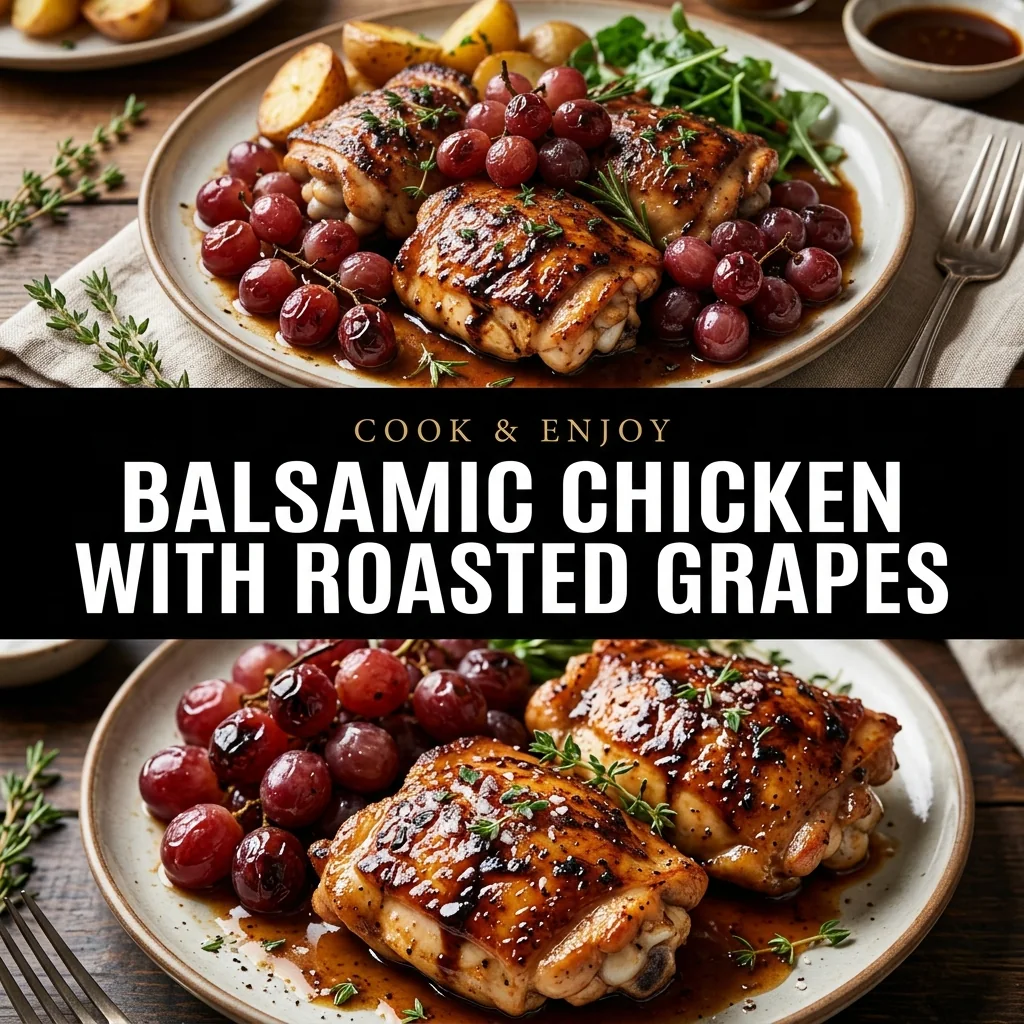
Balsamic chicken with roasted grapes transforms familiar weeknight poultry through the timeless pairing of sweet fruit and tart vinegar. As red grapes heat in the skillet, their taut skins blister and yield rich sugars that mellow the sharp bite of concentrated balsamic vinegar. Searing the chicken cutlets beforehand establishes savory fond on the pan bottom, which dissolves directly into the reduction alongside fresh minced rosemary and softened shallots. This interplay produces an unctuous, jewel-toned sauce without needing heavy cream or flour thickeners. Prepared entirely in a single skillet in under forty minutes, this entree offers an elegant profile suitable for dinner parties while remaining straightforward enough for everyday suppers. Serve alongside creamy polenta, mashed potatoes, or crusty bread to capture the sweet-savory pan reduction.
Balancing Acidity and Fruit Sweetness
The success of this sauce depends on managing the natural sugar within seedless grapes against the punchy acetic profile of balsamic vinegar. Using true aged balsamic vinegar provides a thicker body and subtle raisin notes, whereas common grocery vinegar may skew overly acidic. Blistering whole grapes directly in warm olive oil initiates thermal breakdown, caramelizing exterior sugars while gently softening the interior pulp. When deglazed with chicken broth, the grape juices and vinegar fuse into a balanced emulsion. Taste the pan liquid just prior to returning the chicken; if too tart, an extra splash of broth softens the sharpness naturally.
Pan Selection and Searing Technique
A heavy 12-inch stainless steel or cast-iron skillet delivers the thermal mass necessary to sear cutlets cleanly without cooling down significantly. Moisture on the poultry surface prevents effective browning, so patting breasts thoroughly dry with paper towels is an essential preliminary step. Keep the cutlets spaced apart; overcrowding causes meat to steam rather than develop a golden crust. Once flipped and partially cooked, the chicken leaves flavorful browned proteins behind. The grapes and shallots lift these browned bits when simmering, enriching the overall pan glaze with savory complexity while preventing scorching across the pan surface.
Serving Recommendations and Accompaniments
Because the balsamic grape glaze carries deep sweet-and-sour notes, accompanying side dishes should feature mild, absorbent profiles. Soft polenta finished with butter or Parmesan absorbs the thin glaze effectively, cushioning the roasted fruit textures. Garlic mashed potatoes or steamed long-grain rice similarly balance the tartness of the balsamic reduction. For a lighter evening plate, pair the cutlets with bitter greens such as baby arugula or sautéed Swiss chard; the crisp bitterness of the greens counters the fruit glaze neatly. Garnish with additional fresh rosemary sprigs or cracked black pepper before carrying the warm skillet directly to the table.
Before you start
Select firm, seedless red or black grapes with taut skins so they blister and release juice gradually rather than breaking down into mush. If using thicker chicken breasts, pound cutlets to an even half-inch thickness before cooking to ensure uniform searing. Using moderate-quality balsamic vinegar with noticeable natural sweetness yields better pan glaze than harsh, thin commercial varieties. If the reduction thickens too rapidly before reaching internal temperature, splash in two tablespoons of warm broth.
THE RECIPE
Balsamic Chicken with Roasted Grapes
4 servings · 15 minutes preparation · 25 minutes cooking · 5 minutes cooling, chilling or resting
Ingredients
Step-by-step instructions
- Pat the chicken cutlets dry with paper towels, then season both sides evenly with 0.5 teaspoon kosher salt and the black pepper. Set a 12-inch stainless steel or cast-iron skillet over medium-high heat and add 1 tablespoon olive oil until shimmering.
- Place the cutlets into the hot skillet in a single layer. Sear without moving for 3 to 4 minutes until deeply golden on the bottom, then flip and cook 3 minutes more until lightly browned; transfer the chicken to a warm plate and reserve.
- Lower the heat to medium and pour the remaining 1 tablespoon olive oil into the skillet. Add the sliced shallots and red grapes, stirring occasionally for 3 to 4 minutes until the shallots soften and grape skins begin to wrinkle and blister.
- Stir in the minced garlic and chopped fresh rosemary, cooking for about 1 minute until fragrant while scraping up any browned bits from the pan surface with a wooden spoon.
- Pour the chicken broth and balsamic vinegar into the skillet along with the remaining 0.25 teaspoon kosher salt. Bring the liquid to a steady simmer over medium heat for 3 to 4 minutes until slightly reduced and syrupy.
- Return the seared cutlets and any accumulated juices to the skillet, spooning the balsamic grape sauce over each piece. Simmer uncovered for 4 to 5 minutes until an instant-read thermometer inserted into the thickest part reads 165 F (74 C).
- Remove the skillet from heat and let the chicken rest in the sauce for 5 minutes before portioning. Spoon the warm, blistered grapes and glossy balsamic reduction over each cutlet onto warm dinner plates to serve.
Kitchen notes
Select firm, seedless red or black grapes with taut skins so they blister and release juice gradually rather than breaking down into mush. If using thicker chicken breasts, pound cutlets to an even half-inch thickness before cooking to ensure uniform searing. Using moderate-quality balsamic vinegar with noticeable natural sweetness yields better pan glaze than harsh, thin commercial varieties. If the reduction thickens too rapidly before reaching internal temperature, splash in two tablespoons of warm broth.
Storage & make-ahead
Transfer leftover chicken, grapes, and sauce into an airtight glass or plastic container within 2 hours of cooking. Store in the refrigerator for up to 3 days. To reheat safely, place chicken and sauce into a skillet over medium-low heat with 2 tablespoons of water or chicken broth, cover loosely, and warm until the internal temperature reaches at least 165 F (74 C). Avoid freezing, as cooked grapes become mealy upon thawing.
An original recipe guide inspired by themes in our Pinterest research. Recipe has not been independently kitchen-tested. AI-generated image is illustrative; your finished dish may look different.
Frequently asked questions
Can I use bone-in chicken thighs instead of breasts?
Yes, bone-in thighs work well but require longer cooking. Sear skin-side down for 8 minutes, flip for 4 minutes, and simmer covered with the sauce for 18 to 22 minutes until an instant-read thermometer reads 165 F (74 C).
Can green grapes be substituted for red grapes?
Green seedless grapes may be used, but they possess higher acidity and less natural sweetness than red or black varieties. You may need to simmer them slightly longer and add an extra tablespoon of broth to temper the sharper profile.
Why did my balsamic sauce turn overly dark or bitter?
Balsamic vinegar reduces rapidly due to its sugar content. High heat can burn these sugars quickly. Keep the heat at medium or medium-low once vinegar enters the pan, and add a small splash of broth if liquid evaporates too fast.